Back Pain: Causes, Evaluation, and Treatment in Urbandale, Iowa
Medically Reviewed by Dr. Kyle Ruehle, DC — Advanced Spine Health Center, Urbandale, Iowa (serving the Des Moines metro since 2016)
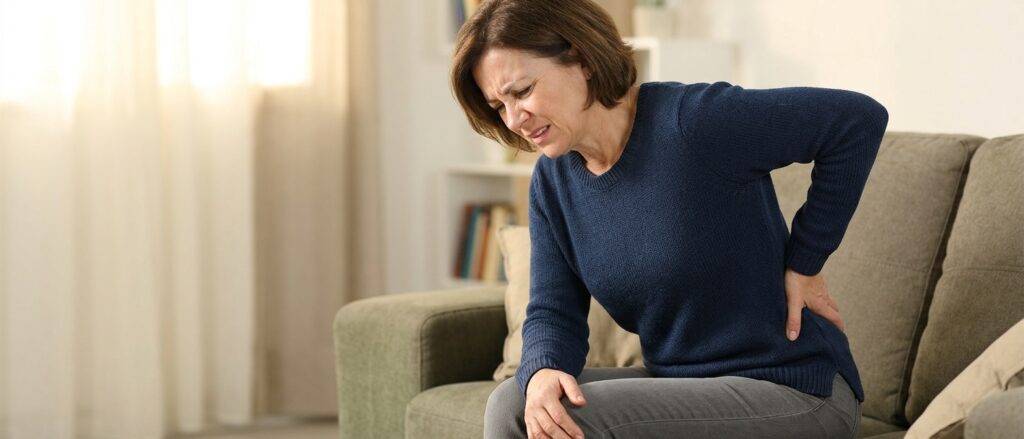
Back pain is one of the most common reasons people search for a chiropractor, and one of the most frequent misconceptions is that it has a single cause. It doesn't. Back pain can come from a disc, a joint, a ligament, a muscle, or from the way the spine is aligned and loaded as a whole — and two people with what feels like the same pain can be dealing with entirely different problems underneath it.
At Advanced Spine Health Center in Urbandale, we start by figuring out what's actually generating the pain before we decide how to treat it. This page walks through the causes of back pain we see most often, how we evaluate them, and how we generally approach treatment once we understand what's going on.
Table of Contents
Structural and Disc-Related Causes | Degenerative and Alignment-Related Causes | Soft Tissue and Muscular Causes | How We Evaluate Back Pain | How We Approach Back Pain Treatment | FAQ | Schedule a Consultation
Structural and Disc-Related Causes
These causes involve a specific structure in or around the spine — a disc, a joint, or the bony canal the nerves travel through. Research on diagnosing back pain has consistently found that no single test reliably identifies which structure is responsible on its own, which is part of why a thorough evaluation matters more than any single finding.5
Disc Bulges and Herniations
Each disc between the vertebrae has a tougher outer layer surrounding a softer, gel-like center. When that outer layer weakens or tears — from repetitive stress, a single injury, or gradual wear over time — the center can bulge outward or push through, sometimes irritating a nearby nerve root. Not every disc bulge causes pain, and not every case of back pain involves a disc at all, which is why imaging findings need to be interpreted alongside your symptoms and exam. We cover disc-related pain, including when it travels into the leg, in more detail on our disc injury page.
Facet Joint and Other Joint-Related Injuries
The facet joints are small paired joints at the back of each spinal segment that allow the spine to bend and rotate. Like any joint, they can be sprained, irritated, or become a source of pain from repetitive loading, awkward movement, or trauma. Facet-related pain often worsens with extension or twisting and can be difficult to distinguish from disc- or SI joint-related pain without a careful exam.
Spondylolisthesis and Spinal Stenosis
Spondylolisthesis occurs when one vertebra slips forward relative to the one below it, which can happen from a stress fracture in a younger patient or degenerative changes later in life. Spinal stenosis is a narrowing of the spinal canal or the openings nerves pass through, most often from a combination of disc height loss, bone spurs, and thickened ligaments as the spine ages.3,4 Both can cause localized back pain, and both can also produce leg pain, numbness, or cramping with walking when a nerve is involved — symptoms we discuss further on our sciatica page.
SI Joint Dysfunction
The sacroiliac (SI) joints connect the base of the spine to the pelvis. SI joint dysfunction is a genuinely common source of low back pain — one clinical review estimates it's involved in roughly one in four cases of chronic low back pain, and it's more frequently identified in women.2 Because SI joint pain can mimic lumbar disc or facet pain, it's often identified through a cluster of specific provocation tests during the physical exam rather than any single maneuver.
Degenerative and Alignment-Related Causes
This group of causes relates less to a single injury and more to how the spine is aligned, how it has changed over time, or how evenly it's loaded.
Arthritis and Degenerative Changes in the Spine
Degenerative changes — disc thinning, bone spurs, and joint wear consistent with osteoarthritis — are extremely common as the spine ages, and they don't always cause pain. Some patients with significant degenerative changes on imaging have little to no pain, while others with more modest changes are quite symptomatic. In our evaluation, we use the degree of degenerative change we see as one piece of information — it helps us understand how much wear the spine has been through and gives us a more realistic sense of what to expect from care — rather than as the sole explanation for the pain. We still focus on improving structure and function around the arthritic segments, and we see patients make meaningful progress even when arthritis is part of the picture.
Subluxations and Spinal Misalignment
In our CBP-based approach, we use the term "subluxation" to describe a measurable change in the position or alignment of one or more vertebrae relative to the spine above and below it — something we assess through a structural exam and, when appropriate, X-ray, rather than something we assume is present. This is a narrower, more specific use of the term than the older idea of subluxation as an invisible "nerve interference" causing disease throughout the body, which isn't how we use the concept and isn't well supported by current evidence.9 What we do know biomechanically is straightforward: when a vertebra's position is measurably off, it changes how load moves through that segment of the spine, which can place uneven stress on the surrounding discs, joints, and muscles over time.
Poor Spinal Curvature and Structural Imbalance
The spine is supposed to have specific curves — including an inward curve in the lower back called lordosis. When that curve becomes exaggerated (hyperlordosis), flattened (hypolordosis), or the spine develops an abnormal side-to-side curve (scoliosis), the way weight is distributed through the discs, joints, and muscles changes. A systematic review and meta-analysis looking specifically at the relationship between lumbar lordosis and low back pain found a meaningful association between abnormal lordosis and pain, which supports why we pay close attention to sagittal alignment, not just disc and joint findings, during a structural workup.6 CBP-specific research has also examined non-surgical correction of lumbar curvature using controlled trials, generally reporting improved pain and function alongside measured changes in lordosis — though this body of research is smaller and more CBP-specific than the broader spinal alignment literature, so we treat it as a promising but still-developing evidence base rather than settled science.7 We cover the more pronounced end of this spectrum — structural scoliosis — on our dedicated scoliosis page.
Leg Length Inequality
A true leg length difference — whether structural (an actual difference in bone length) or functional (from pelvic or postural asymmetry) — can tilt the pelvis and force the spine to compensate, often for years, before it's ever identified. This is an area where we've seen some of our most consistent results: once we confirm a genuine discrepancy with a modified Ferguson or Ferguson X-ray view — using proper measurement and magnification calculations rather than a visual estimate — we apply a heel or shoe lift and retake the X-ray to verify that alignment has actually improved before finalizing the correction. In our experience, patients with long-standing back pain who have an uncorrected leg length difference often see substantial, lasting improvement once it's properly identified and corrected. Outcome research on this specific approach backs up what we see clinically: a study using customized heel-lift orthotics for confirmed leg length discrepancy and nonspecific low back pain reported pain scores dropping from an average of 7.8 to 1.1 within four months, with continued improvement at two years of follow-up.8
Soft Tissue and Muscular Causes
Not every cause of back pain involves a joint or a disc. The muscles, tendons, and ligaments that support the spine are common sources of pain on their own, and they're also frequently involved alongside a structural cause.
Muscle Sprains
A muscle strain in the low back typically happens from lifting something awkwardly, twisting suddenly, or overloading a muscle that wasn't prepared for the demand — whether that's a weekend project, a new workout, or a single wrong step. These usually improve over days to a few weeks with appropriate care, though repeated strains in the same area can point to an underlying movement or structural issue worth evaluating.
Tendon and Ligament Strains
Tendons and ligaments stabilize the spine and connect muscle to bone; when they're stretched beyond their normal range, from a fall, an accident, or repetitive strain, the result is pain, stiffness, and sometimes noticeable instability in the area. Ligament injuries in particular can take longer to heal than muscle strains because ligaments have a more limited blood supply.
Muscle Weakness and Deconditioning
Whether it's from prolonged sitting, a sedentary stretch after an injury, or just gradual loss of conditioning over time, weaker core and spinal support muscles change how well the spine tolerates everyday load. The research here is more nuanced than "weak muscles cause back pain" — deconditioning is associated with chronic low back pain, but it's not simply a one-way cause-and-effect relationship. What's better established is that improving strength and conditioning helps: a network meta-analysis comparing exercise approaches for chronic low back pain found that strength/resistance training, core-based exercise, Pilates, and mind-body exercise were all associated with meaningful improvements in pain and disability, suggesting that building overall capacity matters more than chasing one "correct" exercise.10
Stress and Muscular Tension
Physical and emotional stress can increase muscle tension and guarding in the back, particularly around the lower back and shoulders, and can lower a person's overall tolerance for pain. This doesn't mean the pain isn't real or isn't physical — it means that addressing stress and tension alongside any structural or muscular findings is often part of a complete picture, rather than a separate issue.
How We Evaluate Back Pain at Advanced Spine Health Center
Because back pain can come from so many different sources, our evaluation is built to sort through the possibilities rather than assume the answer. A typical evaluation includes a detailed history, a postural and structural exam, and orthopedic and neurological testing to help identify which structures are likely involved and whether any findings warrant closer attention.
When it's clinically appropriate, we use spinal X-rays — including Ferguson and modified Ferguson views — along with PostureRay® analysis to evaluate spinal alignment, curvature, and leg length. Imaging isn't automatically part of every visit; we use it when it will actually change how we understand or approach your case, particularly when alignment, curvature, or leg length may be contributing to your pain.
Most of the causes described above — including SI joint dysfunction, facet joint irritation, spondylolisthesis, and spinal stenosis — are conditions we evaluate and manage directly in our office as part of an individualized care plan. For more severe presentations, or for patients who aren't progressing as expected with conservative care, we'll discuss co-managing your care with your physician or referring you for a surgical evaluation when that's the more appropriate path.
How We Approach Back Pain Treatment
Once we understand what's actually driving your back pain, treatment is built around your specific findings rather than a single standard protocol. Depending on what we find, care may draw on one or more of the following — some patients need one of these, some need a combination, and the plan changes as you respond to care.
CBP® Structural Correction and Mirror-Image Care
Advanced Spine Health Center is the only CBP-certified office in the Des Moines area. For causes rooted in spinal alignment — misalignment, abnormal lumbar curvature, or scoliosis — our CBP approach uses chiropractic adjustments, mirror-image exercises, and corrective procedures aimed at improving spinal structure and biomechanics, not just relieving the symptom of the moment. This is a process built around your specific structural findings rather than a one-size-fits-all adjustment routine, and it doesn't correct every spinal problem in every patient — how much structural change is realistic depends on your individual presentation. Learn more about this approach on our Chiropractic BioPhysics page.
Spinal Decompression Therapy
For disc-related pain and some cases of spinal stenosis, we may use spinal decompression as part of care. We use a specialized supine traction table, developed by Dr. Ruehle, that applies traction at approximately a 0-degree pull with patient-specific loading that's increased gradually as tolerated. Decompression isn't the right fit for every back pain patient or every disc finding, and we don't present it as a guaranteed fix — it's one tool we use when the evaluation supports it. More detail is available on our spinal decompression therapy page.
Biologic Injections (PRP) for Appropriate Cases
For select cases — particularly where joint or soft tissue irritation is a significant contributor and conservative care alone hasn't fully resolved things — we may discuss PRP injections as part of a broader treatment plan. PRP uses concentrated platelets and growth factors from your own blood, generally drawn in a volume of about 20–60 mL depending on the treatment, and it's prepared and applied specifically for the area being treated. PRP is not a stand-alone cure, and the evidence for PRP in the low back is real but still developing — a 2025 systematic review and meta-analysis found PRP injections were associated with improved pain and function for low back pain in the pooled studies, though the authors noted the evidence base is smaller and more variable than PRP research in peripheral joints and tendons, and larger, more consistent trials are still needed.11 More information is available on our PRP injections page.
Strength and Rehabilitation
When muscle weakness, deconditioning, or poor movement patterns are contributing to your pain, rehabilitation and progressive strengthening are a core part of care rather than an afterthought. This may include corrective exercises tied to your specific structural findings as well as general strengthening aimed at improving your spine's overall tolerance for daily load and activity.
Custom Orthotics
When a confirmed leg length difference or notable foot-mechanics issue is contributing to your back pain, we may use a shoe shim or Mojo Feet custom flexible orthotic as part of your care, guided by X-ray-verified measurements rather than a general estimate. Orthotics aren't something every patient needs — they're used specifically when the evaluation shows they're likely to help.
| Cause | Where It's Often Felt | What Tends to Make It Worse |
|---|---|---|
| Disc bulge/herniation | Low back, sometimes radiating into the leg | Sitting, bending forward, coughing/sneezing |
| Facet joint irritation | Localized to one or both sides of the spine | Extending backward, twisting |
| Spondylolisthesis/spinal stenosis | Low back, sometimes into the legs with walking | Standing, walking, extension (stenosis often eases with sitting/bending forward) |
| SI joint dysfunction | Low back/buttock, often one-sided | Standing on one leg, transitioning from sitting to standing |
| Arthritis/degenerative changes | Diffuse low back stiffness and ache | Prolonged inactivity, first movements in the morning |
| Misalignment/curvature imbalance | Varies with the specific pattern | Prolonged static postures, asymmetric loading |
| Leg length inequality | Often one-sided, may involve the hip | Standing or walking for long periods |
| Muscle/tendon/ligament strain | Localized, often with muscle spasm | The specific movement that caused it, prolonged sitting |
| Deconditioning | General low back fatigue and ache | Activity beyond current tolerance |
Frequently Asked Questions
What is the most common cause of back pain?
Most back pain is considered "non-specific," meaning it doesn't trace back to one clearly identifiable structural cause, and the large majority of cases are mechanical in nature rather than a sign of something serious.1 That said, a careful evaluation can often narrow down whether a disc, joint, muscle, or alignment issue is the primary driver.
Can weak core muscles actually cause back pain?
Deconditioning is associated with chronic low back pain, but the relationship isn't a simple one-way cause and effect. What's better supported is that improving strength and overall conditioning — through core work, resistance training, or other structured exercise — tends to reduce pain and disability regardless of which specific exercise approach is used.
How do I know if my back pain is from a muscle strain or something more serious, like a disc or joint problem?
A muscle strain typically improves noticeably within a couple of weeks and doesn't usually cause pain, numbness, or weakness radiating into the leg. Pain that travels below the knee, doesn't improve with initial care, or is accompanied by numbness or weakness usually points to a disc, joint, or nerve-related cause worth a full evaluation.
Can a leg length difference really cause back pain?
Yes, when it's a genuine, measurable discrepancy. We verify leg length with X-ray measurement rather than a visual estimate, and in our experience, correcting a confirmed discrepancy is one of the more effective things we can do for patients dealing with long-standing back pain that hasn't responded well to other care.
Does arthritis in the spine mean I'll always have back pain?
No. Degenerative changes are common with age and don't always cause pain, and some patients with significant arthritis on imaging have little to no symptoms. We use the presence and extent of arthritis as one piece of the picture, but we still focus on improving structure and function, and patients with arthritis regularly make meaningful progress with care.
Do I need X-rays or imaging for back pain?
Not automatically. We use imaging when it's likely to meaningfully change our understanding of your case — for example, when alignment, curvature, or leg length may be contributing to your pain — rather than as a routine step for every patient.
Back Pain Treatment in Urbandale, Iowa
Back pain has a lot of possible sources, and getting the diagnosis right is what makes a treatment plan actually work. At Advanced Spine Health Center, we take the time to identify what's driving your specific pain — whether that's a disc, a joint, your spinal alignment, a leg length difference, or a soft tissue injury — before recommending a course of care. If you're in Urbandale or the greater Des Moines metro and dealing with back pain, we'd be glad to help you understand what's going on and what your options are.
Schedule a consultation to get started.
About the Author
Dr. Kyle Ruehle, DC is the owner and treating chiropractor at Advanced Spine Health Center in Urbandale, Iowa, serving patients throughout the Des Moines metro since 2016. He is a graduate of Simpson College and Palmer College of Chiropractic, and Advanced Spine Health Center is the only CBP-certified office in the Des Moines area.
References
- Casiano VE, Sarwan G, Dydyk AM, Varacallo M. Back Pain. In: StatPearls. StatPearls Publishing; 2024. NCBI Bookshelf
- Falowski S, Sayed D, Pope J, et al. Sacroiliac Joint Dysfunction: Diagnosis and Treatment. Am Fam Physician. 2022;105(3):239-245. AAFP
- Adult Spondylolisthesis in the Low Back. American Academy of Orthopaedic Surgeons, OrthoInfo. AAOS OrthoInfo
- Lumbar Spinal Stenosis. American Association of Neurological Surgeons. AANS
- Han CS, Hancock MJ, Sharma S, et al. Low back pain of disc, sacroiliac joint, or facet joint origin: a diagnostic accuracy systematic review. eClinicalMedicine. 2023;59:101960. PMC
- Chun SW, Lim CY, Kim K, Hwang J, Chung SG. The relationships between low back pain and lumbar lordosis: a systematic review and meta-analysis. Spine J. 2017;17(8):1180-1191. Spine Journal
- Fedorchuk C, Lightstone DF, McRae C, Kaczor D. Restoring lumbar lordosis: a systematic review of controlled trials utilizing Chiropractic Bio Physics® (CBP®) non-surgical approach to increasing lumbar lordosis in the treatment of low back disorders. J Phys Ther Sci. 2020;32(9):594-600. PubMed
- Bettoni E, et al. Leg Length Discrepancy and Nonspecific Low Back Pain: 3-D Stereophotogrammetric Quantitative Posture Evaluation Confirms Positive Effects of Customized Heel-Lift Orthotics. Front Bioeng Biotechnol. 2021;9:743132. PMC
- Assessment and correction of vertebral subluxation is central to chiropractic practice: is there a gap in the clinical evidence? J Contemp Chiropr. Journal of Contemporary Chiropractic
- Owen PJ, Miller CT, Mundell NL, et al. Best Exercise Options for Reducing Pain and Disability in Adults With Chronic Low Back Pain: Pilates, Strength, Core-Based, and Mind-Body. A Network Meta-analysis. J Orthop Sports Phys Ther. 2022;52(12):782-799. JOSPT
- Platelet-rich plasma therapy for low back pain: A comprehensive systematic review and meta-analysis. 2025. PubMed
This article is provided for general educational purposes and does not replace an individualized evaluation by a qualified healthcare provider. If you're experiencing back pain, particularly pain with numbness, weakness, or changes in bowel or bladder function, seek appropriate medical evaluation.

OFFICE HOURS
Monday
9:00am – 6:30pm
Tuesday
9:00am – 6:30pm
Wednesday
9:00am – 6:30pm
Thursday
9:00am – 6:30pm
Friday
9:00am – 6:30pm
Saturday
Closed

Advanced Spine Health Center
8431 Hickman Road
Urbandale, IA 50322
(515) 423-0708