Spinal Decompression Therapy in Urbandale, Iowa
Medically reviewed by Dr. Kyle Ruehle, DC | Last updated August 4, 2026
If chronic back pain, sciatica, arthritis, or a disc injury has kept you from doing the things you love, surgery may not be your only option. This page is for individuals in Urbandale and the Des Moines metro area seeking nonsurgical options for chronic back pain, sciatica, or disc injuries. Understanding your options for spinal decompression therapy can help you make informed decisions about your spine health and avoid unnecessary surgery.
Spinal decompression therapy is a specialized form of traction designed to relieve back and neck pain.
At Advanced Spine Health Center in Urbandale, we provide nonsurgical spinal decompression therapy to reduce pressure on injured spinal discs and irritated nerves while creating a better environment for healing. We don’t rely on decompression alone. We combine it with structural rehabilitation, [LINK: Chiropractic Biophysics® (CBP®)], chiropractic care, and other therapies to address the underlying mechanical problems that often contribute to chronic back pain.
Many patients come to us after medications, injections, physical therapy, or other conservative treatments have failed to provide lasting relief. Our goal isn’t just to help you feel better for a few days — it’s to identify why your spine continues to hurt and build a treatment plan aimed at long-term improvement.
Because ongoing nerve compression and abnormal spinal mechanics can worsen over time, early evaluation is often beneficial if you’re experiencing persistent back pain, radiating leg pain, numbness, or tingling.
Call Advanced Spine Health Center today to schedule your comprehensive spinal evaluation and find out whether spinal decompression therapy is right for you.
Key Takeaways
Nonsurgical spinal decompression reduces pressure on injured spinal discs and irritated nerves, creating a better environment for healing.
Advanced Spine Health Center is the only CBP-certified chiropractic office in the Des Moines metro, and combines decompression with structural correction rather than using it as a standalone treatment.
Decompression is commonly used for herniated discs, sciatica, degenerative disc disease, and arthritis-related back pain.
Sessions typically last 20-25 minutes and are generally described as a gentle, relaxing stretch rather than painful.
Most patients need anywhere from a few sessions to two to four months of care, depending on the severity and duration of their condition.
Treatment plans are individualized and adjusted based on how each patient responds, not a fixed protocol.
Many patients seek decompression hoping to avoid surgery, and while it isn’t a guarantee, it often helps patients avoid or delay surgical intervention.
On This Page
Why Urbandale Trusts Us | Our Services | How It Works | Who Responds Best? | Expected Results | Why We Combine Treatments | FAQ | Service Area | Why Choose Us? | Schedule Now | References
Why Urbandale Trusts Advanced Spine Health Center
Choosing the right clinic for spinal decompression means finding a practice that accurately identifies the source of your pain and builds a plan addressing every contributing factor — not just your symptoms. Here’s how we approach that at Advanced Spine Health Center.
Chiropractic Biophysics® (CBP®) Certified
We are the only CBP-certified chiropractic office in the Des Moines metro dedicated to structural spinal correction. [LINK: CBP] focuses on improving spinal alignment and posture using evidence-informed corrective techniques designed to reduce abnormal stress on the spine.
Comprehensive Diagnostic Evaluation
Before recommending spinal decompression, we evaluate your posture, spinal alignment, X-rays, symptoms, movement patterns, and — when available — MRI findings. This determines whether decompression is appropriate and identifies other factors that may be contributing to your pain.
Individualized Treatment Plans
No two patients have identical spines, so no two treatment plans should be identical. Every decompression program is customized based on your diagnosis, symptoms, imaging findings, and response to care.
We Treat More Than Just the Disc
Spinal decompression is an excellent tool, but it’s only one piece of the puzzle. Many patients have additional problems contributing to their pain, including:
Poor posture
Loss of normal spinal curves
Scoliosis
Leg length differences
Foot and arch abnormalities
Joint dysfunction
Muscle weakness or imbalance
When these issues go untreated, they continue placing unnecessary stress on the spine — even if the injured disc begins feeling better. By identifying and addressing these mechanical problems alongside decompression therapy, we aim for more complete and longer-lasting results.
Multi-Modal Care
Depending on your condition, your treatment plan may include:
Spinal decompression
Chiropractic adjustments
Chiropractic Biophysics (CBP) rehabilitation
Corrective exercises
Regenerative medicine options, including [LINK: PRP injections]
Cold laser or other supportive therapies
Home rehabilitation recommendations
Rather than relying on one treatment, we combine therapies that work together to improve healing and function.
Experience With Complex Cases
Many of our patients arrive after trying other treatments without lasting success. Whether you’ve been dealing with chronic back pain, arthritis, sciatica, or recurring disc problems, we take the time to identify why previous treatment may not have solved the problem.
Our Spinal Decompression Services
Spinal decompression therapy is a specialized form of spinal traction designed to reduce stress on injured spinal discs, joints, and irritated nerve roots. By gently separating the spinal segments, decompression creates an environment that may reduce nerve irritation, improve movement within the spine, and support the body’s natural healing processes.
While decompression is commonly associated with disc injuries, many patients with arthritis and chronic spinal degeneration can also benefit when treatment is combined with structural rehabilitation. At Advanced Spine Health Center, spinal decompression is commonly used as part of treatment plans for the conditions below.
Herniated Discs
Disc herniations and disc bulges are among the most common reasons patients seek decompression therapy. As pressure is reduced around the injured disc, many patients experience decreased nerve irritation, less inflammation, and gradual improvement in pain and function. A 2022 randomized controlled trial published in the International Journal of Clinical Practice found that patients receiving nonsurgical spinal decompression showed significantly greater reductions in herniation size on follow-up MRI than a comparison group, with nearly 27% of treated patients experiencing more than a 50% reduction in herniation size, alongside improvements in pain and disability scores (Choi et al., 2022).
Sciatica
Sciatica occurs when one or more nerves in the lower back become irritated or compressed, causing pain, numbness, tingling, or weakness that travels into the buttock and leg. By reducing mechanical stress around these irritated nerve roots, spinal decompression may help decrease symptoms while allowing patients to stay active during recovery. For many patients, decompression works best when combined with correcting the structural issues that contributed to the nerve irritation in the first place.
Degenerative Disc Disease and Arthritis
Having arthritis on an X-ray or MRI doesn’t mean nothing can be done besides managing pain. While spinal decompression cannot reverse arthritis, many patients with arthritic changes still experience significant improvements in pain, mobility, and daily function. In fact, most patients we treat have at least some degree of arthritis on their imaging. Rather than focusing only on the arthritis itself, our goal is to improve how the spine functions while reducing unnecessary stress on injured tissues.
How Spinal Decompression Works at Advanced Spine Health Center
Every treatment plan is individualized, but most patients can expect the three-step process below.
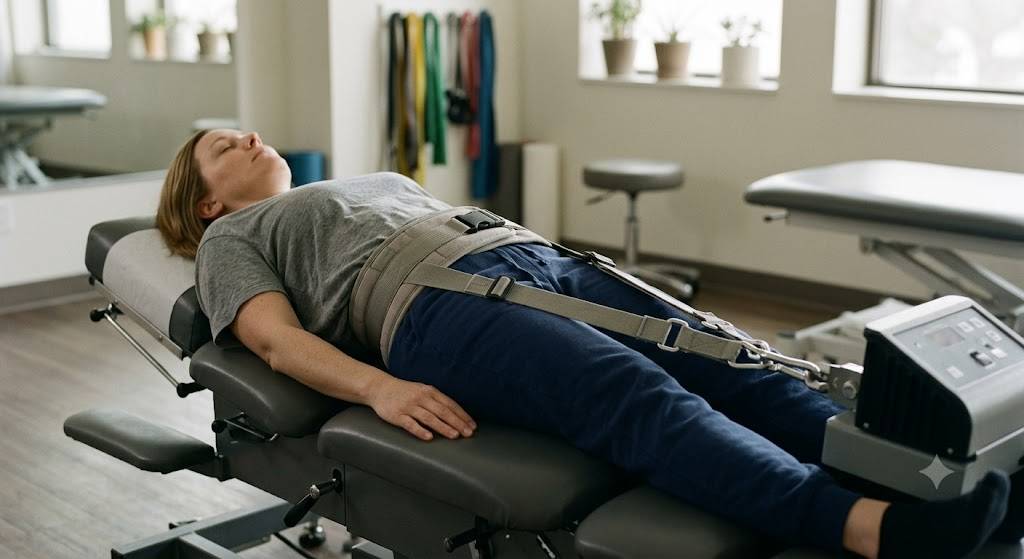
Nonsurgical spinal decompression uses motorized traction to stretch the spine, gently relieving pressure on spinal discs and nerves.
Step 1: Comprehensive Evaluation
Every new patient begins with a thorough consultation and examination that looks at not only where your pain is located, but why it’s occurring. Your evaluation may include:
A detailed health history
Orthopedic and neurological testing
Posture analysis
Digital X-rays
MRI review (if available)
Functional movement assessment
Not everyone is a candidate for spinal decompression. Patients with certain conditions — such as spinal fractures, severe osteoporosis, spinal tumors, some types of spinal hardware, or other medical contraindications — may require a different treatment approach. Your examination helps us determine the safest, most effective plan for your specific situation.
Step 2: Your Decompression Sessions
During treatment, you’ll lie comfortably on our spinal decompression table while a harness system gently applies carefully controlled traction to the affected area of your spine. Unlike traditional traction, spinal decompression applies and releases tension in a controlled manner to reduce stress on injured discs, joints, and irritated nerves. Most sessions last approximately 20 to 25 minutes.
Many patients expect decompression to be painful because they’re already dealing with significant back pain or sciatica. Instead, most describe it as a gentle stretching sensation that feels relieving — some patients become relaxed enough to nearly fall asleep during their session.
We Don't Use a One-Size-Fits-All Protocol
Your treatment progresses according to your body’s response, not a preset formula. We typically begin with lighter traction forces to see how your spine responds. If you’re improving and tolerating treatment well, we gradually increase the traction over time. If increasing the traction creates more soreness than we’d like, we back off to the previous level. Because every patient’s injury is different, this individualized progression often produces better results than using identical settings for everyone.
How Many Treatments Will I Need?
Most patients need anywhere from a few sessions to two to four months of care, depending on the severity and duration of their condition. Some notice meaningful improvement quickly. Others — particularly those with more significant disc damage, longstanding arthritis, chronic sciatica, or additional structural problems — take longer to reach the level of improvement they’re hoping for.
Several factors influence recovery, including:
How long you’ve had the problem
The severity of the disc injury
The amount of arthritis present
Overall spinal alignment
Posture abnormalities
Foot mechanics
Leg length differences
Muscular weakness and stability
How consistently you’re able to follow your treatment recommendations
Rather than placing every patient into a predetermined schedule, we continually monitor your progress and adjust your treatment plan based on how you’re responding. Our goal isn’t simply to complete a certain number of visits — it’s to help you achieve the best possible outcome.
Step 3: Monitoring Your Progress
Throughout your treatment plan, we continually evaluate your progress rather than repeating the same treatment each visit. We monitor improvements in:
Pain levels
Daily function
Mobility
Range of motion
Activity tolerance
Overall quality of life
When appropriate, we may also review follow-up imaging or perform additional structural evaluations to assess changes over time. As your symptoms improve, we gradually shift our focus from reducing pain to improving spinal function, stability, and long-term health.
Which Patients Tend to Respond Best?
Spinal decompression often provides the greatest benefit for patients dealing with:
Chronic low back pain
Degenerative disc disease
Disc bulges
Contained disc herniations
Arthritis affecting the spine
Longstanding sciatica
Patients hoping to avoid surgery
Many of these patients have already tried medications, injections, physical therapy, or other conservative treatments. One of the most rewarding parts of our practice is helping patients who’ve been told to simply “live with it” because arthritis showed up on imaging. While arthritis itself can’t be reversed, improving spinal mechanics and reducing unnecessary stress on irritated tissues can often make a significant difference in pain and function.
Are There Patients Who May Need a Different Approach?
Yes. Patients with a very recent, severely painful disc injury can still benefit from spinal decompression, but treatment doesn’t always begin aggressively. When tissues are highly inflamed immediately after an injury, our first priority is often calming the irritated area before progressing into a more comprehensive decompression program. Once acute inflammation settles, patients typically tolerate decompression much better and progress more comfortably.
What Results Can You Expect?
Spinal decompression has helped many patients reduce pain, improve mobility, and return to activities they’d previously given up because of back or leg pain — though no ethical healthcare provider can guarantee specific results. Your outcome depends on your diagnosis, the severity of your condition, how long you’ve had symptoms, your overall health, and how consistently you follow your treatment plan.
A 2022 randomized controlled trial published in BMC Musculoskeletal Disorders found that patients with lumbar radiculopathy who received nonsurgical spinal decompression in addition to physical therapy showed significantly greater improvements in pain, range of motion, functional disability, and quality of life than patients who received physical therapy alone (Amjad et al., 2022).
At Advanced Spine Health Center, our goal isn’t simply to reduce pain temporarily — it’s to improve how your spine functions so you can enjoy more lasting results.
Why We Combine Decompression With Structural Rehabilitation
Spinal decompression is one of the most valuable tools we have for treating many disc-related conditions, but it’s still only one tool.
Think of it this way: if a tire on your car keeps wearing out because the alignment is off, replacing the tire may solve the immediate problem, but it doesn’t fix the reason the tire wore out in the first place. The spine works similarly. If excessive stress continues being placed on the same injured disc because of poor posture, abnormal spinal curves, scoliosis, leg length differences, foot mechanics, or joint dysfunction, the injured tissue may continue to be overloaded.
That’s why our treatment plans often combine spinal decompression with [LINK: Chiropractic Biophysics® (CBP®)], chiropractic adjustments, corrective exercises, and other therapies designed to improve the overall mechanics of your spine — reducing stress on the injured tissue while helping your body function more efficiently moving forward.
Frequently Asked Questions
Does spinal decompression hurt?
No — most patients find spinal decompression comfortable, describing a gentle stretching sensation rather than pain. Many find treatments relaxing, especially after the first few visits. As your body adapts, mild soreness can occasionally occur, similar to starting a new exercise program, but it usually resolves quickly. If you ever feel excessive discomfort, we modify your treatment immediately.
I was told I have arthritis. Can spinal decompression still help?
Yes. While spinal decompression cannot remove arthritis or reverse age-related changes, many patients with arthritis still experience significant improvements. In fact, most patients we see have some degree of arthritis on their X-rays or MRI. Instead of focusing only on the arthritis itself, we focus on improving how the spine moves, reducing unnecessary stress on injured tissues, decreasing nerve irritation, and correcting the mechanical problems contributing to your pain.
Is spinal decompression safe?
For appropriately selected patients, yes — spinal decompression is generally considered a safe, conservative treatment option. Before beginning treatment, we perform a thorough examination to confirm you’re a good candidate. Patients with certain conditions, including severe osteoporosis, spinal fractures, spinal tumors, some forms of spinal instability, or certain types of spinal hardware, may not be candidates. Temporary soreness is possible, particularly early in care, and we’ll discuss any potential risks before treatment begins.
Will I have to stop my normal activities?
Usually not. Extended bed rest is rarely helpful for most spine conditions, so we generally encourage patients to continue normal daily activities as much as symptoms allow. Walking is often beneficial, and many patients also respond well to home stretching, massage devices, ice, or heat depending on their condition. We simply ask patients to avoid activities that consistently trigger a significant increase in symptoms while healing takes place.
Will my insurance cover spinal decompression?
It depends on your specific policy — some plans provide benefits for decompression or traction-related services, while others provide limited or no coverage. Before beginning treatment, our team will verify your benefits and explain exactly what your insurance covers. If you’re paying out of pocket or have limited coverage, we also offer [LINK: our Patient Care Discount (PCD) Plan] to help make treatment more accessible.
Can spinal decompression help me avoid surgery?
For many patients, yes — though no conservative treatment can guarantee surgery will never be necessary. Many patients with disc injuries, sciatica, or chronic back pain improve enough that surgery is no longer being considered. If we believe your condition requires surgical evaluation or another form of medical treatment, we’ll tell you honestly and help guide you toward the most appropriate next step.
Serving Urbandale and the Greater Des Moines Metro
Advanced Spine Health Center proudly serves patients from throughout Central Iowa looking for a conservative approach to back pain, neck pain, and sciatica. Patients regularly visit our office from:
Urbandale
West Des Moines
Clive
Johnston
Grimes
Waukee
Ankeny
Des Moines
Windsor Heights
Norwalk
Altoona
Pleasant Hill
If you’re within driving distance of the Des Moines metro, we’d be happy to help determine whether spinal decompression therapy is an appropriate treatment option for your condition.
Why Choose Advanced Spine Health Center?
When you’re dealing with chronic back pain or sciatica, choosing a provider isn’t just about finding equipment — it’s about finding a doctor who takes the time to understand why you’re hurting.
At Advanced Spine Health Center, we believe successful treatment starts with an accurate diagnosis and a comprehensive understanding of how your spine functions. Rather than simply treating the painful area, we evaluate the entire mechanical system — including spinal alignment, posture, movement patterns, joint function, and other contributing factors — to build a treatment plan that’s personalized for you.
For many patients, spinal decompression becomes an important part of that plan. Combined with [LINK: Chiropractic Biophysics® (CBP®)], chiropractic care, corrective rehabilitation, and individualized recommendations, our goal is to reduce pain while improving the health and function of your spine over the long term.
Whether your symptoms developed gradually over many years or you’ve been struggling to find answers after trying other treatments, we’re committed to helping you understand your options and providing honest recommendations based on your specific condition.
Ready to Find Out if Spinal Decompression Is Right for You?
Living with back pain, sciatica, or a disc injury can affect every part of your life — from your ability to work and exercise to simply enjoying time with your family. The good news is that surgery isn’t always the only option.
If you’re experiencing chronic back pain, leg pain, numbness, tingling, or symptoms related to a disc injury, a comprehensive evaluation can help determine what’s causing your pain and whether spinal decompression should be part of your treatment plan.
At Advanced Spine Health Center, we believe every patient deserves a clear diagnosis, realistic expectations, and a treatment plan tailored to their individual needs.
Schedule your new patient consultation today and take the first step toward moving more comfortably and getting back to the activities you enjoy.
References
Amjad, F., Mohseni-Bandpei, M. A., Gilani, S. A., Ahmad, A., & Hanif, A. (2022). Effects of non-surgical decompression therapy in addition to routine physical therapy on pain, range of motion, endurance, functional disability and quality of life versus routine physical therapy alone in patients with lumbar radiculopathy: A randomized controlled trial. BMC Musculoskeletal Disorders, 23(1), 255. https://doi.org/10.1186/s12891-022-05196-x
Choi, E., Gil, H. Y., Ju, J., Han, W. K., Nahm, F. S., & Lee, P.-B. (2022). Effect of nonsurgical spinal decompression on intensity of pain and herniated disc volume in subacute lumbar herniated disc. International Journal of Clinical Practice, 2022, 6343837. https://doi.org/10.1155/2022/6343837
This article is provided for educational purposes only and does not constitute medical advice. Spinal decompression therapy may not be appropriate for every patient. Please consult with a qualified healthcare provider to determine whether this treatment is right for your specific condition.